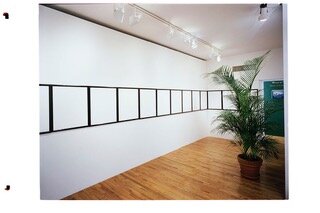
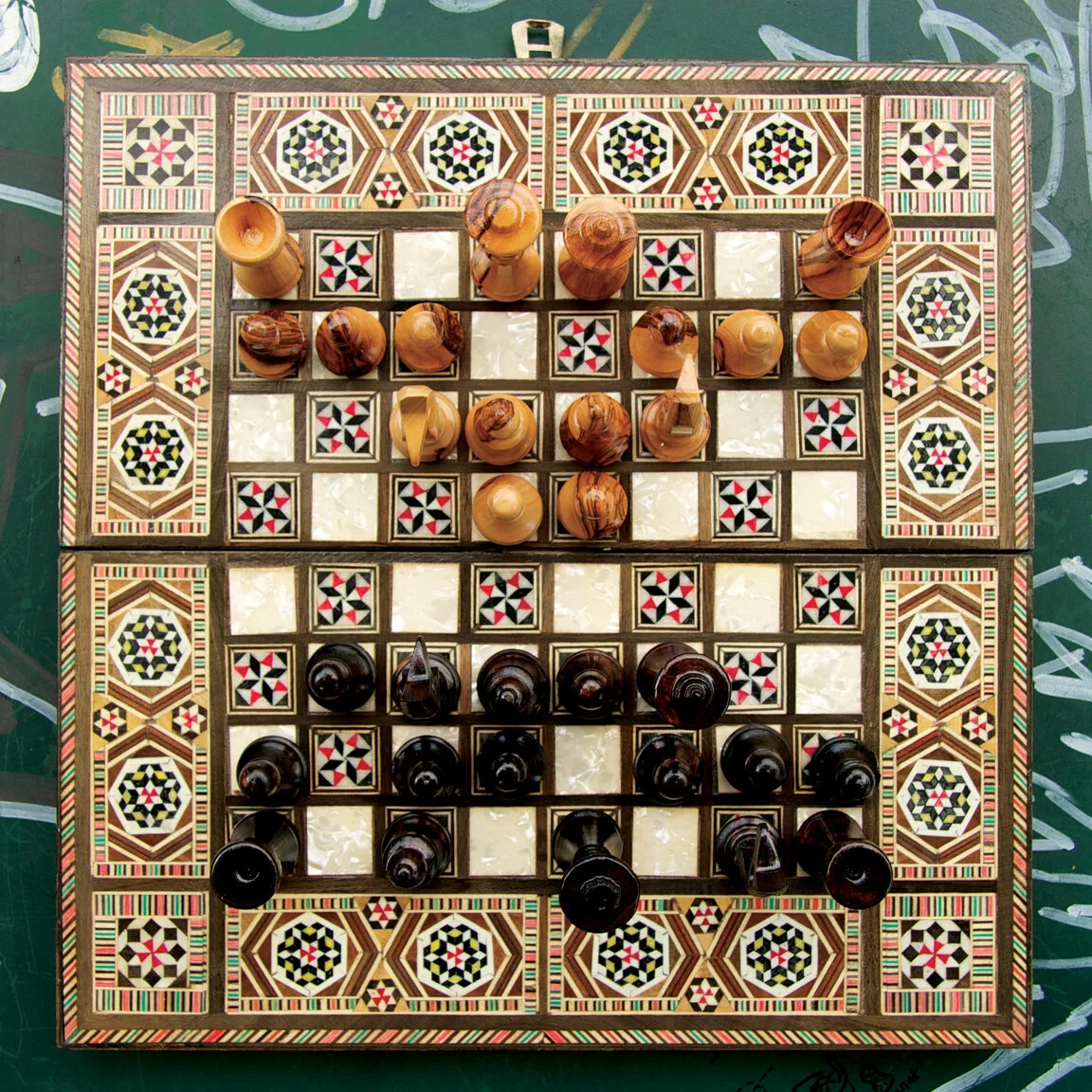
Upon hearing that the square was the subject of my graduate thesis, “The Persistence of and Resistance to Structure: The Grid-Square Construct in Western Visual Culture,” my partner’s brother Stefan exclaimed: “Really? That’s so boring!” Stefan, a reclusive polymath, sincerely meant “boring” as a compliment. He went on to explain that many other research papers try so hard to be interesting by focusing on obscure topics, employing fancy terms, and trendy approaches. The square, on the other hand, is so boring that a research paper about it had to be interesting. At least that was the logic of his adulation.
In any event, Stefan helped me see The Square Project in an interesting historical context. After explaining that I began the photographic series (the impetus to my thesis) in 2001, he observed how that was both the year in the title 2001: A Space Odyssey (1968), a film that blew the minds of its viewers with its stunning visual effects and cryptic science-fiction narrative, and the year of the World Trade Center Attacks. Stefan went on to explain that the squarish monoliths that appear in the film, which play a central role in advancing the human race, resemble the “gothic-modernist” austerity of the twin towers, both of which had perfectly square footprints. I hadn’t thought about this before, and felt like there was something there.
In my thesis, I do mention how the World Trade Center was designed by Japanese-American architect Minoru Yamasaki who also designed the Pruitt-Igoe housing project in St. Louis. Both projects were created with modernist ideals of design: no historical referents, reduced forms, squared angles, etc. The only major difference between these buildings was their function. Pruitt-Igoe was an notorious housing project that was demolished in 1972 due to its abject failure in delivering the modernist dream of “worker housing.” In The New Paradigm in Architecture: The Language of Postmodernism, architectural theorist Charles Jencks wrote:
Modern architecture died in St. Louis, Missouri, on July 15, 1972 at 3:32 PM (or thereabouts) when the infamous Pruitt-Igoe scheme, or rather several of its slab blocks, were given the final coup de grâce by dynamite. Previously it had been vandalized, mutilated and defaced by its inhabitants, and although millions of dollars were pumped back, trying to keep it alive (fixing the broken elevators, repairing smashed windows, repainting), it was finally put out of its misery. Boom, boom, boom.
Footage of the decay and demolition of the Pruitt-Igoe housing project appears prominently in the experimental documentary film Koyaanisqatsi: Life Out of Balance (1982), while the fate of the World Trade Center, once a symbol of global capitalism, was watched in real time all over the world.
It seems almost ironic that these two modernist building complexes, designed by the same architect–one for working-class residences in St. Louis, the other for international commerce–should be destroyed so soon after their creation. Both events were highly mediated and, in their own ways, symbolize the failed ideals of modernism. While the mysterious squarish monolith in 2001 aids in human evolution within a fictional universe, the destruction of similar forms have come to symbolize failed policy–both domestic and foreign–in the real world. If modern architecture–and, by extension, modernism–died on July 15, 1972, perhaps postmodernism ended on September 11, 2001.